Article
When LIFE Magazine Classified America's Taste: The 1949 Highbrow–Lowbrow–Middlebrow Taxonomy
In September 1949, LIFE magazine ran a feature that stopped readers cold. It wasn't a war report or a celebrity profile — it was a chart. A sprawling, two-page classification of what Americans read, ate, wore, and thought, sorted into three categories: highbrow, lowbrow, and the anxious middle — middlebrow.
The piece was written by Russell Lynes, managing editor of Harper's Magazine, and it struck a nerve that still vibrates. Almost 80 years later, we still talk about "highbrow" and "lowbrow" tastes. We still feel the pull between wanting to seem cultured and wanting to just enjoy things. Lynes didn't invent the categories, but he gave them a shape that proved impossible to forget.
Where "Highbrow" Came From (It's Phrenology)
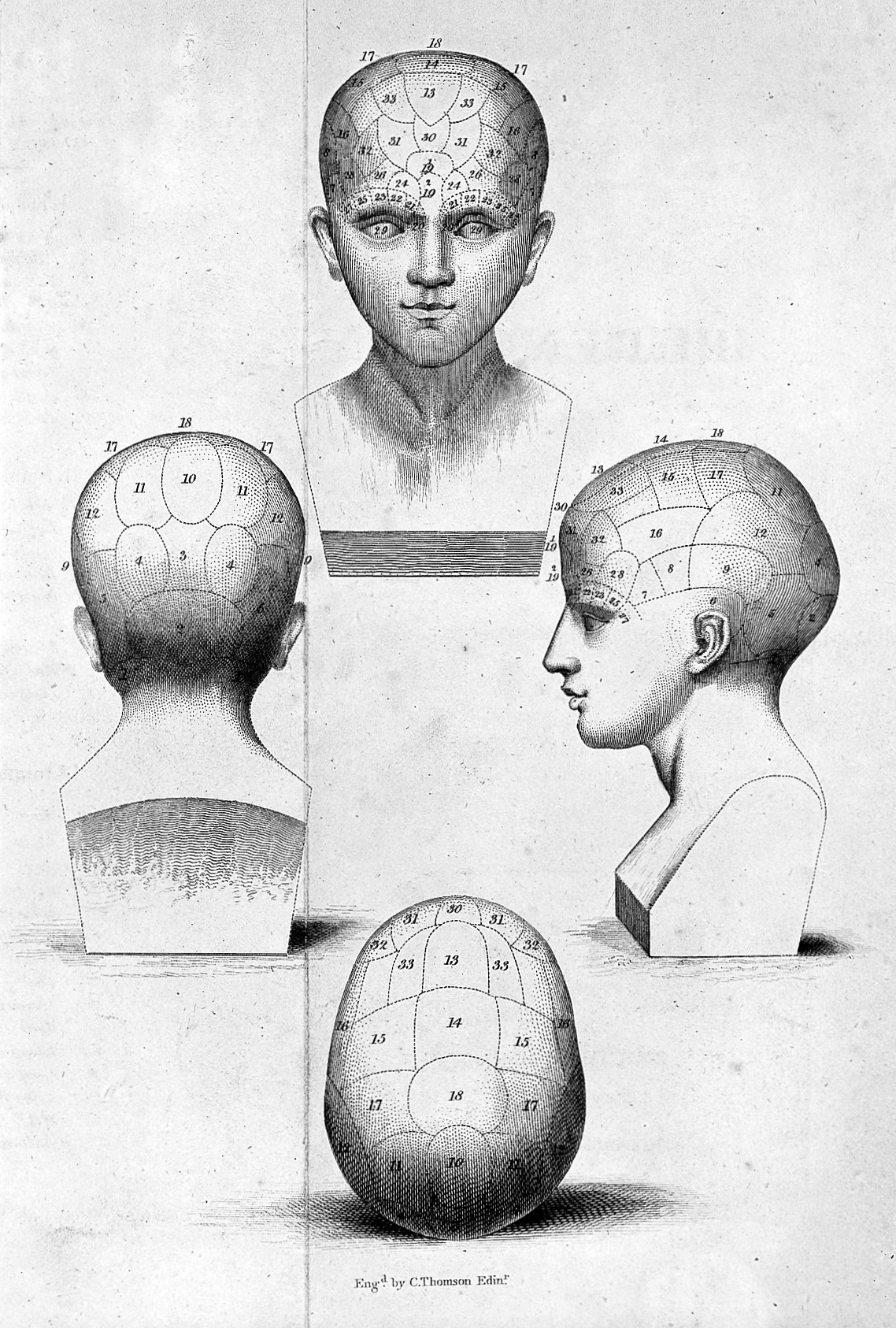
The word highbrow predates Lynes by decades. It first appeared in print in 1875, drawing its imagery from the pseudoscience of phrenology — the belief that the shape and size of a person's skull revealed their intelligence. Phrenologists claimed that people with larger foreheads had more brainpower, and "highbrow" became shorthand for an intellectual. The term was popularized in 1902 by Will Irvin, a reporter for the New York Sun, who leaned into the phrenological idea that smarter people quite literally had higher brows. [1][2]
By the time Lynes wrote in 1949, "highbrow" and "lowbrow" were in common use, and "middlebrow" had been floating around since at least 1925, when Punch magazine described it as "people who are hoping that some day they will get used to the stuff that they ought to like." [3] Virginia Woolf wrote a famously tart unsent letter on the subject in the 1930s, arguing that highbrows and lowbrows were symbiotically dependent — a highbrow like Hamlet unravels without a lowbrow like Ophelia to ground him. [4]
What Lynes' Chart Actually Said
The LIFE spread divided American culture into a grid. In the HIGHBROW column: listens to Bach and Stravinsky, reads The New Yorker and The Atlantic, eats foreign cheese and drinks burgundy, decorates with abstract art and "contemporary" furniture. In the LOWBROW column: listens to hillbilly and swing, reads comic books and pulp magazines, eats pie à la mode and drinks beer, decorates with movie-star photos and "Grand Rapids" furniture (a put-down for mass-produced goods).
And in the MIDDLEBROW column — the biggest slice of all — the anxious aspirants: listens to semiclassical music, reads The Saturday Evening Post and Book-of-the-Month Club selections, serves "salad as a main dish for Sunday night supper," decorates with maple furniture and "reproductions of early American." [5][6]
The chart was catnip. It let you locate yourself and your neighbors on a single cultural map, and it provoked exactly what Lynes intended — argument. "Are you sure opera is highbrow?" "My uncle loves Rachmaninoff and he's a plumber." The taxonomy was reductive on purpose; its value was in starting the conversation, not ending it.
The Legacy: From 1949 to the Algorithmic Feed
Lynes' framework was more than a magazine novelty. It fed into a larger cultural argument happening in mid-century America: who gets to decide what's "good" taste? The highbrow/middlebrow/lowbrow classification reflected real anxieties about class, education, and social mobility in the postwar boom.
The chart has been rediscovered many times. In 2013, a high-resolution scan circulated online and went viral again. In September 2026, a tweet by @anuatluru showing the LIFE spread racked up over 998,000 views in two days — proof that the question of taste classification is as compelling as ever. [6]
Lawrence W. Levine, in his 1988 book Highbrow/Lowbrow: The Emergence of Cultural Hierarchy in America, traced how this kind of cultural stratification hardened in the late 19th and early 20th centuries. Before that, Shakespeare was performed in mining camps and opera arias were sung in saloons. The "highbrow" box is a surprisingly recent invention — as recent, in cultural terms, as the idea that art belongs in museums rather than on barroom walls. [7]
What The Chart Gets Wrong (And Why That's the Point)
Every critic of the LIFE chart has made the same observation: it imposes a single axis of taste and calls it a hierarchy. You can love both Bach and comic books — in fact, most people do. The sociologists Richard A. Peterson and Roger M. Kern argued in a 1996 study that "highbrow" taste had shifted from exclusive snobbery to inclusive omnivorousness. The modern cultured person isn't the one who only listens to classical; it's the one who can talk about both Stravinsky and Dolly Parton. [8]
But that's exactly why Lynes' chart keeps getting shared. It's a time capsule of a moment when a magazine could lay out the taste of a nation on a single piece of paper. The 1949 chart was never an accurate description of what people actually liked — it was a provocation, a snapshot of cultural anxiety, and an invitation to argue. That's the part that hasn't aged.
Sources:
[1] Hendrickson, Robert. Encyclopedia of Word and Phrase Origins. New York: Facts on File, 1997. — traces "highbrow" to 1875 and phrenology.
[2] "Highbrow." Oxford English Dictionary (online ed.). — first print usage 1884; popularized by Will Irvin of the New York Sun in 1902. https://www.oed.com/
[3] Quoted in Micki McGee, Yaddo: Making American Culture, p. 106. — "middlebrow" first appeared in Punch, 1925.
[4] A. Fox, Virginia Woolf and the Literature of the English Renaissance (1990), p. 107. — Woolf's unsent letter, describing highbrow-lowbrow dependency.
[5] Lynes, Russell. "Highbrow, Lowbrow, Middlebrow." LIFE Magazine, September 1949. — the original chart and article.
[6] @anuatluru on X (Twitter), September 26, 2026. "Everyday tastes from high-brow to low-brow — LIFE Magazine, 1949." ~998K views. https://x.com/anuatluru/status/2103831350037958791
[7] Levine, Lawrence W. Highbrow/Lowbrow: The Emergence of Cultural Hierarchy in America. Harvard University Press, 1988. — cultural stratification as a late-19th-century invention.
[8] Peterson, Richard A. and Roger M. Kern. "Changing Highbrow Taste: From Snob to Omnivore." American Sociological Review, Vol. 61, No. 5 (1996), pp. 900–907. — the shift from highbrow exclusivity to cultural omnivorousness.