Article
Tulip Mania: The Real Story Behind History's Most Famous Bubble
You've heard the story. In 1630s Holland, tulip bulbs sold for more than houses. The entire nation — nobles, merchants, chimney sweeps, maids — went mad for tulips, driving prices to absurd heights until the bubble burst, fortunes were destroyed, and the Dutch economy was plunged into crisis.
It's one of history's most famous cautionary tales. Almost none of it actually happened that way.
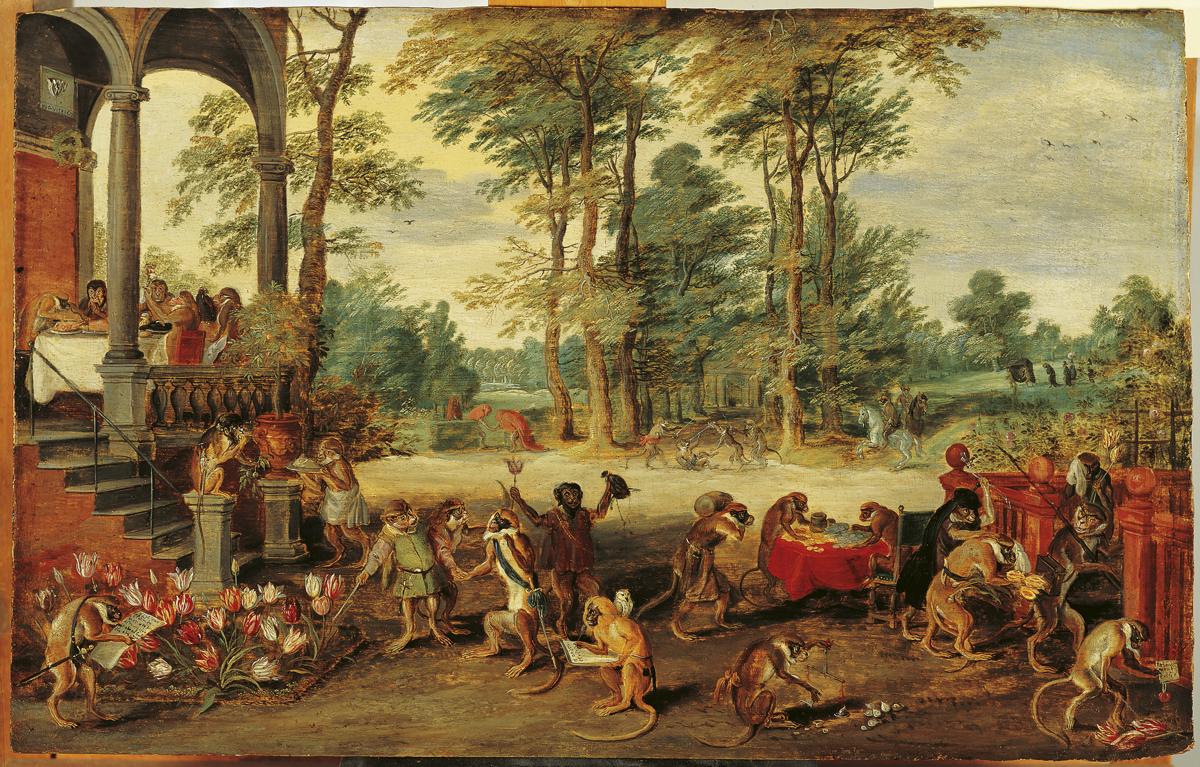
The Mackay Story That Everyone Knows
The story we all think of as "Tulip Mania" didn't come from the 1630s. It came from 1841, when Scottish journalist Charles Mackay published Extraordinary Popular Delusions and the Madness of Crowds. His account of "The Tulipomania" is vivid, dramatic, and almost entirely wrong (History.com, "The Real Story Behind the 17th-Century 'Tulip Mania' Financial Crash").
Mackay wrote that at the peak of the mania, a single bulb of the prized Semper Augustus sold for 5,000 guilders — the price of a grand house. He claimed that "nobles, citizens, farmers, mechanics, sea-men, footmen, maid-servants, even chimney-sweeps and old clothes-women, dabbled in tulips." When the bubble burst, Mackay asserted, "substantial merchants were reduced almost to beggary" and the Dutch economy suffered a devastating shock (Charles Mackay, Extraordinary Popular Delusions and the Madness of Crowds, 1841).
It's a great story. But Mackay's main source was not financial records or court documents. It was a series of satirical propaganda pamphlets published anonymously after the events, particularly one called Dialogue between True-mouth and Greedy-goods. As the Oxford historian Jonathan Denby points out, it is "in the very nature of satire to exaggerate to make a point" — making it a terrible historical source (Oxford Faculty of History, "Tulipmania: A Garden Historian's Perspective").
What Anne Goldgar Found in the Archives
In the early 2000s, historian Anne Goldgar of King's College London decided to find out what actually happened. She spent years combing through Dutch archives — public notary records, small claims courts, wills, and contracts from Amsterdam, Haarlem, Alkmaar, and other cities. Her findings, published in Tulipmania: Money, Honor and Knowledge in the Dutch Golden Age (2007), paint a very different picture (History.com).
It was a small group. Goldgar identified only about 350 people involved in the tulip trade. These were mostly successful merchants and artisans — exactly the kind of people you'd expect to be speculating in luxury goods. She found no evidence of chimney sweeps, maids, or peasants buying tulip contracts (History.com; Wikipedia, "Tulip Mania").
No one went bankrupt. Despite combing through bankruptcy records, Goldgar could not find a single person who was ruined by the tulip crash. The people who stood to lose 1,000 guilders "were wealthy enough that losing 1,000 guilders wasn't going to cause them great problems," she told History.com. "It's distressing and annoying, but it didn't have any real effect on production."
The economy was unaffected. There was no depression, no wave of suicides, no "prolonged economic crisis." The Dutch Republic remained one of the world's leading economies for decades (Wikipedia). As Goldgar puts it simply: "the idea that tulip mania caused a big depression is completely untrue."
So What Did Happen?
There was real speculative activity, but it was more contained and rational than the myth suggests:
1. Tulips were genuinely valuable. The tulip was a new, exotic flower from the Ottoman Empire, introduced to Europe only decades earlier. The spectacular "broken" tulips with flame-like streaks and stripes — which we now know were caused by a mosaic virus — were genuinely rare and beautiful. The colors were unlike anything European gardeners had ever seen. Owning a rare tulip was a status symbol, like owning a Picasso or a Ferrari today (Wikipedia; Oxford History).
2. The market was seasonal and small. Most trading happened in the winter of 1636-37. Contracts were often "futures" — buyers agreed to pay for bulbs that hadn't yet been harvested. When the market turned, the Dutch courts and city councils ruled that these contracts were unenforceable gambling debts. Most disputes were settled by paying a nominal 3.5% to 10% of the contract value. No one was forced to sell their house (Oxford History; Wikipedia).
3. The most extreme prices were outliers. A Semper Augustus bulb was offered for 5,000 guilders at one point — but this was a once-in-a-generation bulb variety owned largely by one man, Dr. Adriaan Pauw, a director of the Dutch East India Company, who refused to sell any. The limited supply drove up offers. Only 37 people paid more than 300 guilders for a bulb — the equivalent of a skilled craftsman's annual salary. Most trades were much smaller (History.com; Wikipedia).
4. Similar price spikes happen with any new fashionable flower. England had an orchid mania in the Edwardian period, with single bulbs selling for £1,500 (a farm's worth). Hyacinths had similar price runs in Holland after tulips. The pattern — new exotic flower spikes in price, then falls as propagation makes it common — is normal horticultural economics, not mass psychosis (Oxford History).
Where the Myth Came From (and Why It Survived)
Mackay didn't invent the story from nothing. The 1630s Dutch had their own moral panic about speculation. Satirists wrote poems and pamphlets mocking the bloemists (flower collectors) who spent fortunes on perishable plants. These satires, meant to ridicule social climbers, were taken literally by Mackay two centuries later as factual accounts (Oxford History; History.com).
The myth survives because it's a good story — and a useful one. Every time there's a speculative bubble — from South Sea to dot-com to crypto — someone invokes Tulip Mania to show how irrational markets can get. The problem is that the irrationality narrative became a taught lesson, repeated by serious economists like John Kenneth Galbraith and Burton Malkiel without anyone checking the original sources (History.com).
As Denby puts it in the Oxford History article: "History may or may not repeat itself; historians repeat each other."
What the Tulip Episode Actually Teaches
The real Tulip Mania is less dramatic than the myth, but arguably more instructive:
Narratives shape markets. The story of "everyone went mad for tulips" was created by moralizing satirists in the 1630s, repeated by a sensationalist journalist in 1841, and has been cited as fact ever since. The story about the bubble became more influential than the bubble itself. This is a phenomenon that repeats constantly — narratives about what's happening in a market can move the market.
Fashion is not irrational. Paying a lot for something rare and beautiful is not, by itself, a cognitive failure. The tulip buyers were doing what luxury buyers have always done — spending money on status goods. The "irrationality" label was applied after the fact by people who disapproved of social climbing.
Contracts matter. The Dutch system's refusal to enforce speculative futures contracts as gambling debts actually prevented the kind of cascading collapse that would have caused real economic damage. This is a lesson modern regulators could study.
The scale of a bubble matters. 350 wealthy people losing some money on tulips is a financial footnote. When modern commentators invoke Tulip Mania to compare with the housing bubble of 2008 or crypto, they're comparing something that barely dented the Dutch economy with events that caused trillions in damage and millions of job losses. The comparison is flattering to neither.
Sources
- Dave Roos, "The Real Story Behind the 17th-Century 'Tulip Mania' Financial Crash," History.com, March 16, 2020 (updated May 27, 2025). https://www.history.com/articles/tulip-mania-financial-crash-holland
- Jonathan Denby, "Tulipmania: A Garden Historian's Perspective," Oxford Faculty of History. https://www.history.ox.ac.uk/tulipmania-garden-historians-perspective
- Wikipedia, "Tulip Mania." https://en.wikipedia.org/wiki/Tulip_mania
- Anne Goldgar, Tulipmania: Money, Honor and Knowledge in the Dutch Golden Age (University of Chicago Press, 2007).
- Charles Mackay, Extraordinary Popular Delusions and the Madness of Crowds (1841) — the source of the myth, cited for contrast.