Article
The War of the Worlds "mass panic" was mostly invented — by newspapers losing money to radio
On the night the Martians invaded New Jersey — October 30, 1938 — 98 percent of American radio listeners were tuned to something else. [1]
That's the number that undoes the most famous story in broadcasting history. Orson Welles's The War of the Worlds was supposedly the night radio drove a nation to mass hysteria: thousands fleeing their homes, wives clutching poison bottles, a National Guard mobilizing against alien war machines. The legend is so durable it shows up in textbooks, documentaries, and the origin myth of media effects research.
Only the panic was so tiny on the night it happened that the radio industry's own ratings service could barely measure it. The papers that reported the hysteria the next morning weren't eyewitnesses to chaos. They were competitors — and radio was eating their money.
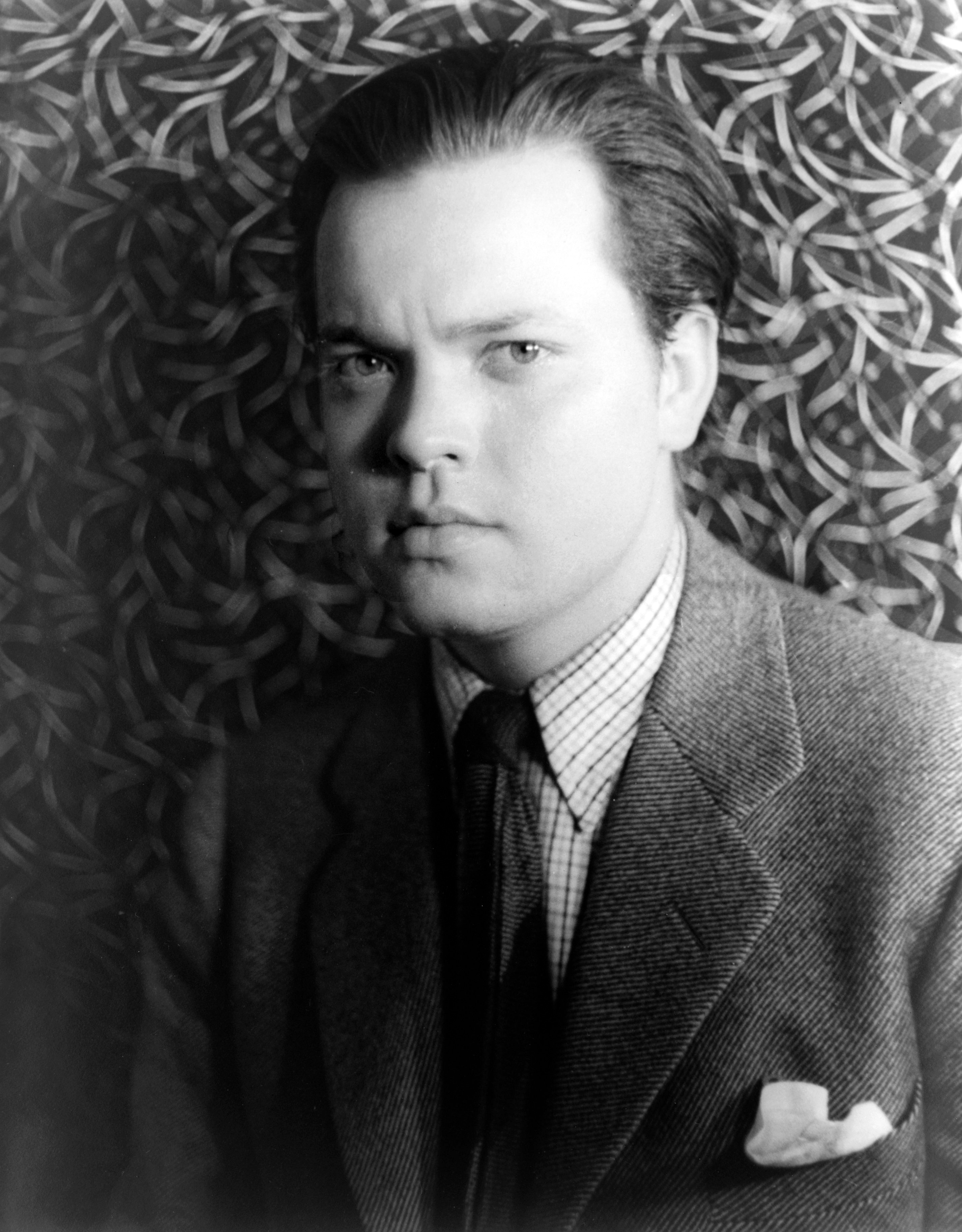
What actually happened that night
The War of the Worlds aired Sunday, October 30, 1938, 8–9 pm ET on CBS, as the 17th episode of the Mercury Theatre on the Air. The first half-hour simulated breaking news: bulletins interrupting dance music, an on-scene reporter at a farm in Grovers Mill, New Jersey, a "heat ray," a reporter's microphone going dead. Wells's 1898 novel had been transplanted to contemporary America by Howard Koch. Welles was 23 years old and had been on the cover of Time months earlier. [2][3]
The night it aired, the C.E. Hooper ratings service telephoned 5,000 households for its national survey and asked what they were listening to. Only 2 percent named the Welles program. None said a "news broadcast," according to a summary the trade magazine Broadcasting published. Two percent of a national sample — against one of the biggest shows on radio at the time, ventriloquist Edgar Bergen's Chase and Sanborn Hour on NBC. [1][2]
CBS commissioned its own survey the next day. Network executives were relieved: "In the first place, most people didn't hear it," CBS research head Frank Stanton recalled. "But those who did hear it, looked at it as a prank and accepted it that way." Several CBS affiliates, including Boston's WEEI, had pre-empted the broadcast for local commercial programming, shrinking the audience further. [1]
The legend later explained all this away with a convenient mechanism: millions of Bergen listeners "twirled the dial" during a musical interlude and landed mid-invasion, missing the announcement that it was fiction. No scholar has ever isolated or extrapolated an actual number of dial-twirlers — the rating data wasn't specific enough to test it, and the modern account of the broadcast (A. Brad Schwartz's 2015 Broadcast Hysteria) finds such switches happened only in rare instances. [1][3]
The myth machine: why the papers ran with it
Radio had siphoned advertising revenue away from print throughout the Depression, badly damaging the newspaper industry. Welles's program handed the papers a weapon: if they could convince advertisers and regulators that radio was an irresponsible, untrustworthy news medium, the upstart competitor took the hit. [1]
The next morning the New York Times ran the front-page headline "Radio Listeners in Panic, Taking War Drama as Fact," over the subhead "Many Flee Homes to Escape 'Gas Raid From Mars'." The story assembled the catalog of horrors that still anchors the legend: more than twenty families in one Newark block fleeing with wet handkerchiefs over their faces, thousands of phone calls to police, a Pittsburgh wife found holding a bottle of poison, "weeping and hysterical women" in Providence, a San Franciscan volunteering to fight the Martians. [2]
The Times also published an editorial, "Terror by Radio," reproaching "radio officials" for interweaving "blood-curdling fiction" with news flashes "offered in exactly the manner that real news would have been given." Editor & Publisher, the newspaper industry's trade journal, warned that "the nation as a whole continues to face the danger of incomplete, misunderstood news over a medium which has yet to prove... that it is competent to perform the news job." [1]
The disconnect between what reporters had actually seen and what they filed could be stark. Ben Gross, the New York Daily News radio editor, later recalled that as his taxi sped to CBS headquarters that night, the streets of Manhattan were deserted — nobody was running from Martians. That observation didn't stop the Daily News from splashing the panic story across its legendary front page a few hours later. [1]
W. Joseph Campbell, the American University communication scholar who studied the coverage, put it bluntly: the contemporaneous reporting was "almost entirely anecdotal and largely based on sketchy wire service roundups that emphasized breadth over in-depth detail." [2]
How the myth got a scientific seal of approval
The legend might have faded if not for a book. In 1940, Princeton psychology professor Hadley Cantril published The Invasion from Mars, a landmark study of the "panic" that became a founding text of media-effects research. His estimate: about six million people heard the broadcast, 1.7 million believed it was a news bulletin, and 1.2 million were "frightened or disturbed." [3]
The problem was the underlying data. Cantril leaned heavily on a survey compiled six weeks after the broadcast by the American Institute of Public Opinion — a survey Cantril himself admitted offered an audience rating "over 100 per cent higher than any other known measure of this audience." The AIPO data, media historians Jefferson Pooley and Michael Socolow wrote, "was clearly tainted by the sensationalistic newspaper publicity following the broadcast (a possibility Cantril also admitted)." More fundamentally, Cantril conflated being "frightened," "disturbed," or "excited" by a suspense drama with being "panicked" — an obvious categorical error, since radio audiences were regularly frightened by suspense plays at the time without running into the streets. [1][2]
The receipts: no bodies, no hospital beds
Cantril's own research staff — the Princeton Office of Radio Research — tried to confirm the stories circulating in the press. A rumor that several people had been treated for shock at St. Michael's Hospital in Newark was checked and found false. When the researchers surveyed six New York City hospitals six weeks after the broadcast, "none of them had any record of any cases brought in specifically on account of the broadcast." Wire services had relayed stories of unnamed panicked listeners "saved only by the timely intervention of friends or neighbors," but not one newspaper ever reported a verified suicide connected to the program. No death has ever been conclusively attributed to the broadcast. [1][2]
One frightened listener did sue CBS for $50,000, claiming "nervous shock." The lawsuit was quickly dismissed. [1]
Four days after its sensational report, the Washington Post printed a letter from a reader who had walked down F Street in Washington during the broadcast: "In many stores radios were going, yet I observed nothing whatsoever of the absurd supposed 'terror of the populace.' There was none." [1]
The honest version
None of this means nothing happened. Phone switchboards did light up in some cities — the New York Times itself reported thousands of calls to police, newspapers and radio stations, and the broadcast was announced as fiction four separate times (per a statement WABC, the New York affiliate, issued an hour after the show). Some listeners were genuinely frightened, and a small number may well have panicked — disproportionately people who tuned in late and missed the framing, and a large share of those believed the U.S. was under attack by Germany, not Mars. Snopes rates the grand claim — "mass hysteria convincing thousands of panicked listeners across North America that Earth was being attacked" — Mostly False. [2]
Real, but local and bounded. The FCC chairman, Frank McNinch, quietly obtained an informal agreement from the networks not to use fake news "flashes" again — no official rulings were promulgated, and neither CBS nor Welles was sanctioned in any manner. Welles apologized at a hastily called news conference the next morning, and no punitive action followed. [1][3]
Why the myth survives
A panic that never happened kept growing in the retelling for one simple reason: as the show receded in time, more and more people claimed to have heard it. The audience "swelled" in memory until it seemed most of America had been tuned to CBS that night. Pooley and Socolow point to a subtler incentive, too: the story flatters the media's sense of its own power — radio as a force so potent it can empty the streets. The papers that needed to discredit radio in 1938 invented a parable about radio's terrifying influence, and we've been repeating it, approvingly, ever since. [1]
The Martians never landed. Neither, really, did the panic — a 2 percent audience became, in print, a continental hysteria, because the people writing the headlines had skin in the game. The most famous mass panic in American broadcasting history was, in the most literal sense, a press release: a story the newspapers told about their rival, that they needed to be true.
Sources:
- [1] Jefferson Pooley & Michael J. Socolow, "The Myth of the War of the Worlds Panic," Slate, Oct 28 2013 — https://slate.com/culture/2013/10/orson-welles-war-of-the-worlds-panic-myth-the-infamous-radio-broadcast-did-not-cause-a-nationwide-hysteria.html
- [2] David Emery (Snopes), "Did the 1938 Radio Broadcast of 'War of the Worlds' Cause a Nationwide Panic?" pub. Oct 27 2016, upd. Oct 30 2023 — https://www.snopes.com/fact-check/war-of-the-worlds/
- [3] Wikipedia, "The War of the Worlds (1938 radio drama)" — https://en.wikipedia.org/wiki/The_War_of_the_Worlds_(1938_radio_drama)
- Image: Orson Welles, photographed by Carl Van Vechten, March 1 1937 — public domain, Library of Congress via Wikimedia Commons — https://upload.wikimedia.org/wikipedia/commons/f/ff/Orson_Welles_1937.jpg