Article
The Mona Lisa wasn't famous until it was stolen — and the man who took it did it for love, not money
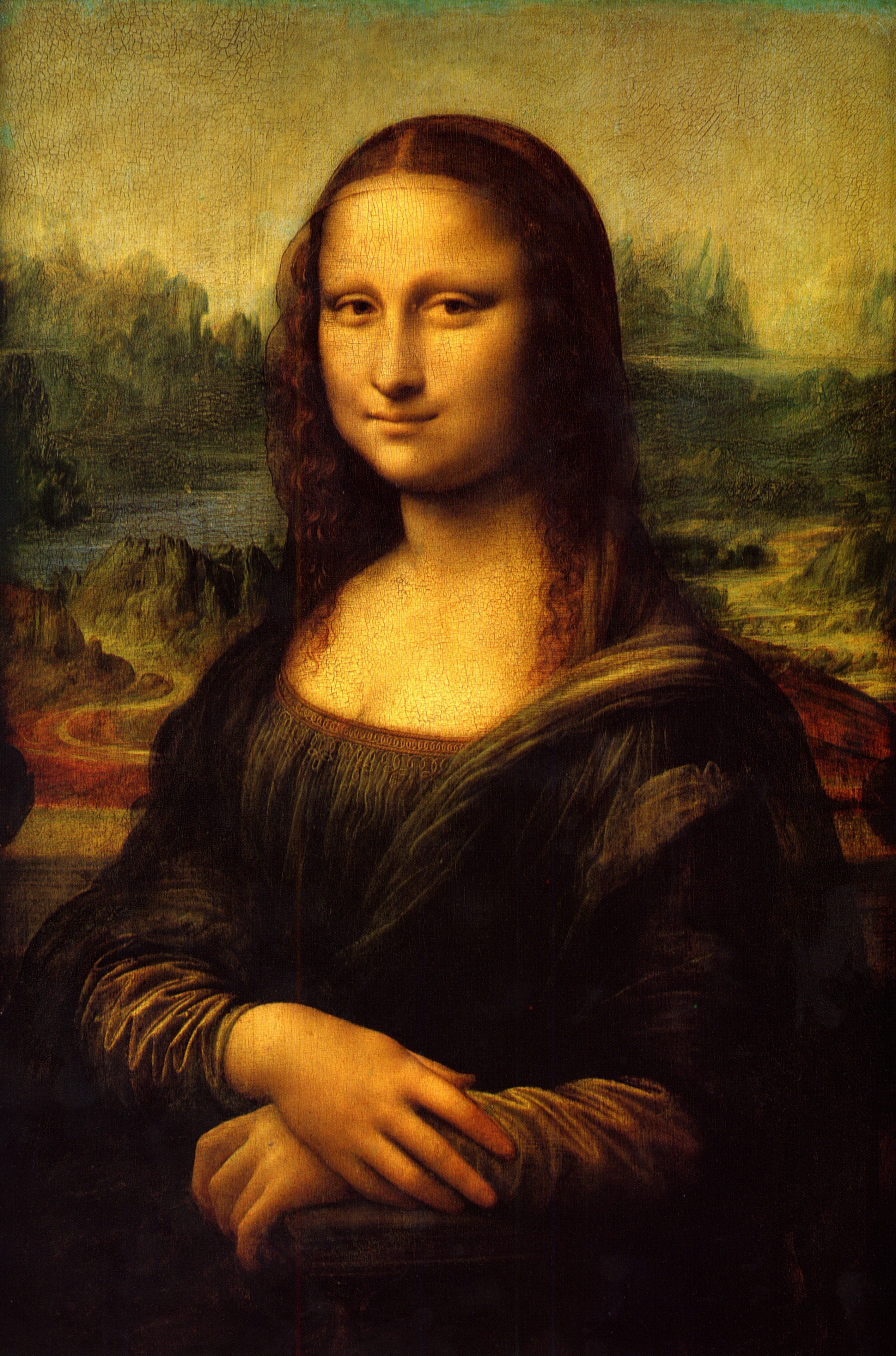
The most famous painting in the world was, for most of its existence, just one of many fine Renaissance portraits hanging in the Louvre. It had no bulletproof glass, no room of its own, no crowd three deep. It was a well-regarded Leonardo da Vinci among other well-regarded Leonardos. Then, on the morning of August 21, 1911, it vanished — and the empty space on the wall became more famous than the painting had ever been.
Before the theft: a respected painting, not a global icon
The Mona Lisa (La Gioconda) was painted by Leonardo da Vinci between roughly 1503 and 1506, possibly continuing until 1517. King Francis I of France acquired it after Leonardo's death in 1519, and it entered the collection of the French royal family. By 1797 it was on display at the Louvre in Paris. Art historians and connoisseurs admired it — Leonardo's sfumato technique, the subject's enigmatic expression, the atmospheric landscape — but it was not a household name. It was not the painting that drew visitors to the Louvre. That would change in a single morning. [1]
The theft: a disguise, a closet, and a two-year silence
On Monday, August 21, 1911, Vincenzo Peruggia — a 29-year-old Italian handyman who had worked at the Louvre — walked into the museum dressed in a white worker's smock, the same uniform worn by Louvre employees. He waited for the room that held the Mona Lisa to empty, lifted the painting off its four iron wall hooks, tucked it under his smock, and walked out. The museum did not notice the painting was missing until the next day, when a painter named Louis Béroud arrived to sketch the Mona Lisa and found an empty space on the wall. [1]
Peruggia hid the painting in his Paris apartment for two years. He kept it in a trunk with a false bottom. He never tried to sell it, never demanded a ransom, never contacted authorities. The world searched — the Louvre offered a reward, the police interviewed hundreds of people, the poet Guillaume Apollinaire was arrested and briefly jailed as a suspect, and Pablo Picasso was brought in for questioning. Neither was involved. [1]
The empty wall was a bigger attraction than the painting
During the two years the Mona Lisa was missing, the Louvre did something strange: it left the empty space where the painting had hung. Visitors lined up to see the bare wall. More people came to see the absence of the Mona Lisa than had ever come to see the painting itself. The theft had done what four centuries of quiet display could not — it turned the Mona Lisa into a story, and everyone wanted to see where the story happened. [1]
The recovery: a cheap hotel room and a patriotic motive
In December 1913, two years after the theft, Peruggia contacted a Florence art dealer named Alfredo Geri. He wrote a letter claiming to have the Mona Lisa and offered to return it to Italy "in the name of Italian patriotism." Peruggia believed the painting had been stolen from Italy by Napoleon (a common myth — Francis I had acquired it legally a century before Napoleon was born) and that he was restoring it to its rightful home. He checked into a Florence hotel with the painting, and when he handed it over to Geri and the director of the Uffizi Gallery, they verified its authenticity by matching a crack in the panel with photographs. Peruggia was arrested. The painting toured Italy briefly, then was returned to the Louvre. [1]
Peruggia served seven months in prison. He was hailed as a folk hero by some Italians. After his release, he served in the Italian army in World War I, married, and returned to France, where he died in 1947.
What the theft created
The publicity from the theft and recovery transformed the Mona Lisa into a global phenomenon. The story had everything: a daring heist, a mysterious motive, a two-year manhunt, a patriotic twist. It was the most-covered art theft in history up to that point. The event spawned an opera (Mona Lisa, 1915), two films in the early 1930s (including The Theft of the Mona Lisa starring Willi Forst as Peruggia), and eventually the Nat King Cole song "Mona Lisa" (1950) — one of the most successful songs of the decade. [1]
By 1962, the Mona Lisa was insured for $100 million — a Guinness World Record — and today it is the most visited, most written about, and most parodied work of art in the world. The painting that was once just a wall fixture in a crowded museum became a cultural touchstone because, for two years, it was missing.
The irony
Vincenzo Peruggia claimed he stole the painting because he believed it belonged to Italy. In a sense, he was right about one thing: the Mona Lisa had not yet become Italy's most famous cultural export before he took it. It became that because he stole it. A man who wanted to return the painting to its home country made it, instead, the property of the entire world's imagination — and the most famous painting in history.
Sources:
- [1] Wikipedia, "Mona Lisa" — https://en.wikipedia.org/wiki/Mona_Lisa (verified 2026-11-10). Sections on 1911 theft, fame, and recovery. The painting's global fame and popularity partly stem from its 1911 theft by Vincenzo Peruggia; the theft and subsequent recovery generated unprecedented publicity for an art theft and led to many cultural depictions.