Article
The Big Mac Index: How a throwaway joke became a 40-year economic institution
The Big Mac Index: How a throwaway joke became a 40-year economic institution
In September 1986, The Economist published something that looked like a joke. An editor named Pam Woodall had calculated the price of a McDonald's Big Mac in different countries and used it to argue that currencies were wildly mispriced. France's franc, she claimed, was overvalued by 73%. Brazil's currency was undervalued by a staggering 87%. [^1]
It was supposed to be a lighthearted way to explain purchasing power parity (PPP) — the economic theory that exchange rates should eventually equalize the price of identical goods across countries. "It seeks to make exchange-rate theory a bit more digestible," the magazine wrote. [^2]
Four decades later, the Big Mac Index is anything but a joke. It's taught in university economics courses, cited in academic textbooks, tracked by currency traders, and even referenced by central bankers. [^3] A throwaway illustration became one of the most durable and recognized economic indicators in the world.
The origin story
Pam Woodall, an economics editor at The Economist, published the first Big Mac Index in the September 1986 issue. The idea was elegantly simple: instead of comparing the prices of thousands of goods (as the OECD does for official PPP calculations), use a single product sold in nearly every country — the Big Mac. [^2]
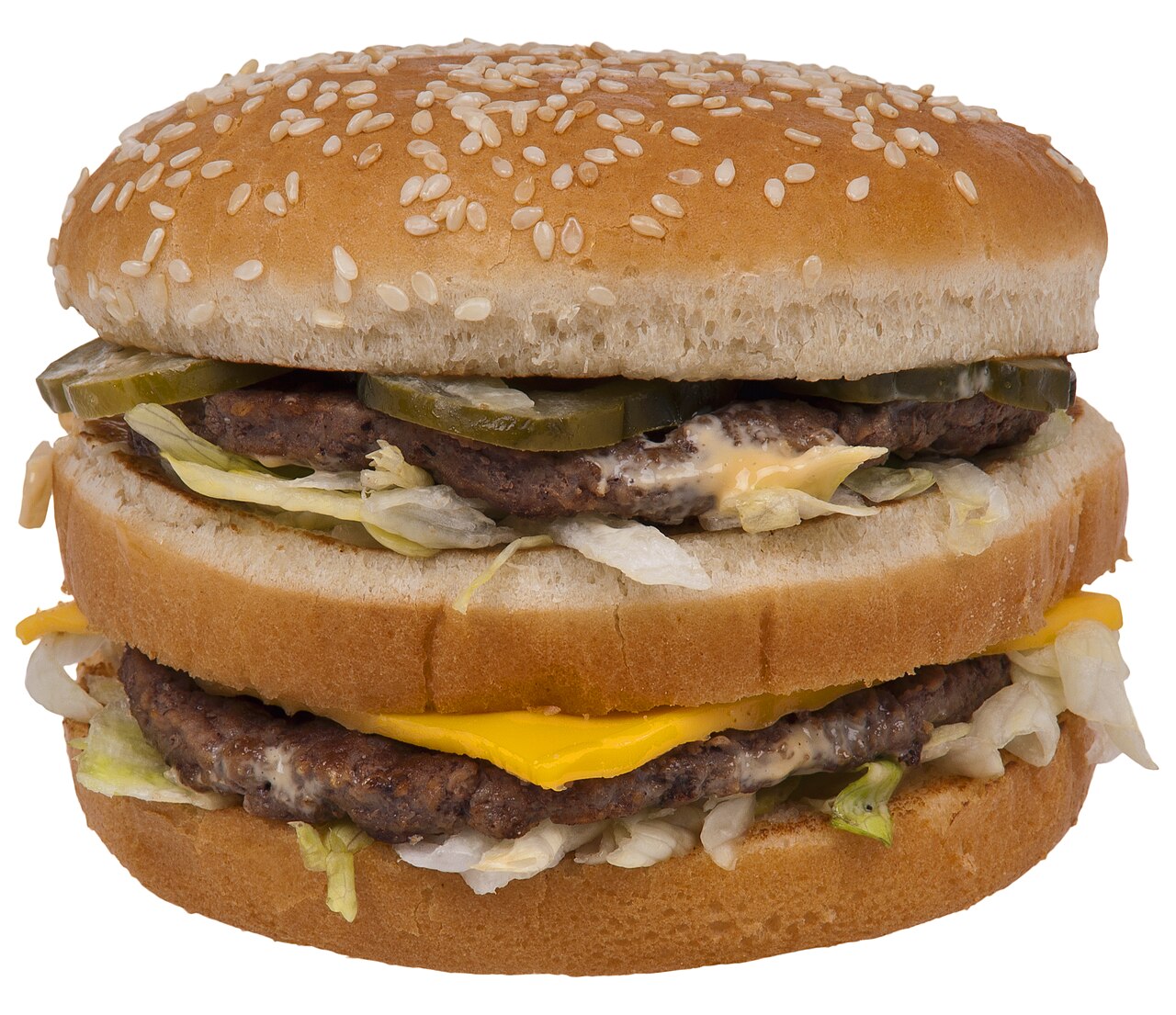
McDonald's was the perfect vehicle. The chain operated in dozens of countries, and the Big Mac was remarkably standardized: two beef patties, special sauce, lettuce, cheese, pickles, onions, on a sesame seed bun. The price of that burger, Woodall argued, reflected local costs of ingredients, labor, rent, and advertising — a microcosm of a country's economy in a sesame seed bun. [^2]
The name "burgernomics" was born, and the index has been published annually (and later, more frequently) ever since. [^2]
How it works
The mechanics are straightforward:
- Take the price of a Big Mac in Country A (in local currency)
- Divide it by the price of a Big Mac in the United States (in USD)
- The result is the "implied exchange rate" according to PPP
For example, using July 2023 data: a Big Mac cost 6.70 Swiss francs in Switzerland and $5.58 in the US. The implied exchange rate is 6.70/5.58 = 1.20 francs per dollar. But the actual exchange rate was 0.87 francs per dollar — meaning the Swiss franc was overvalued by about 38%. [^2]
When a currency is undervalued, the index suggests it should strengthen over time. When it's overvalued, it should weaken. This makes the index a rough-and-ready tool for currency forecasting — and a perennial favorite among forex traders and hedge fund analysts. [^4]
From joke to institution
The Big Mac Index's journey from novelty to institution is remarkable. It's now:
- Taught in economics curricula worldwide as an accessible introduction to PPP theory [^3]
- Featured in academic research — Cambridge University Press's Currencies, Commodities and Consumption devotes a full chapter to it [^5]
- Tracked by financial professionals — currency analysts regularly cite it in research notes
- Published as an interactive tool by The Economist with 40+ years of data, updated regularly
In July 2026, The Economist published a 40th-anniversary retrospective, noting that despite four decades of the index, currencies remain persistently mispriced — and the index remains a useful, if imperfect, guide. [^1]
The limitations — honest about imperfection
The index has real weaknesses, and its creators have always been transparent about them:
Geographic coverage. McDonald's isn't everywhere. In Africa, it's only in Morocco, Egypt, South Africa, and Mauritius — so little data points exist for the continent. (This gap inspired a "KFC Index" using the price of a 15-piece bucket instead. [^2])
Local pricing strategies. McDonald's doesn't set prices based on PPP theory. In some countries, the burger is positioned as premium fast food; in others, it's a cheap everyday meal. A Big Mac in New York City costs more than one in rural Alabama. [^2] The price reflects local strategy as much as currency value.
Non-tradable costs. Rent, labor, and utilities — major components of a Big Mac's price — don't equalize across borders the way traded goods do. A pound of beef costs different amounts in different countries. This is a structural reason PPP diverges from market exchange rates. [^2]
The Argentina episode. In perhaps the most colorful example of the index's real-world impact, Argentina's government under President Cristina Fernández de Kirchner was accused of manipulating Big Mac prices to improve the country's showing on the index. In 2011, The Economist noted that Argentina's "burger inflation" (19% annually) far exceeded its official inflation rate (10%) — a discrepancy that supported claims the government was cooking the books. McDonald's Argentina reportedly came under pressure from Commerce Secretary Guillermo Moreno to keep Big Mac prices artificially low. When the press exposed the scheme, prices suddenly jumped 26% overnight. [^2]
Variants and spin-offs
The Big Mac Index spawned a family of imitators:
- Tall Latte Index (2004) — The Economist itself replaced the Big Mac with a Starbucks coffee [^2]
- Billy Index — Bloomberg converts IKEA Billy bookshelf prices across countries into USD [^2]
- iPad Index — comparing prices of Apple products (before the iPad was discontinued)
- KFC Index — for African coverage, where KFC has wider presence than McDonald's [^2]
Why it endures
The Big Mac Index survives because it does something most economic indicators don't: it's understandable. Anyone can grasp the idea that a burger should cost roughly the same in London and Tokyo if exchange rates are "correct." It makes an abstract concept (PPP) tangible.
It also survives because The Economist kept running it. Year after year. The cumulative data set — 40 years of burger prices across dozens of countries — is itself valuable. You can track how currencies moved relative to PPP over decades, and see which countries got cheaper or more expensive.
And it survives because it's useful. Not as a precise forecasting tool, but as a conversation starter, a teaching aid, and a sanity check. When a currency looks wildly overvalued by the burger test, it's worth asking why.
As The Economist put it in 2026: the index "seeks to make exchange-rate theory a bit more digestible." [^1] Four decades in, it's still doing exactly that.
Sources:
[^1]: "Despite 40 years of our Big Mac index, currencies are still mispriced" — The Economist, July 30, 2026. https://www.economist.com/interactive/briefing/2026/07/30/the-big-mac-index-at-40 [^2]: "Big Mac Index" — Wikipedia. https://en.wikipedia.org/wiki/Big_Mac_Index [^3]: "What Is the Big Mac Index? History, Formula, & Examples" — Britannica Money. https://www.britannica.com/money/Big-Mac-index [^4]: "Understanding Purchasing Power Parity With the Big Mac Index" — Investopedia. https://www.investopedia.com/articles/fundamental-analysis/ppp-big-mac.asp [^5]: "Purchasing power parity and the Big Mac Index (Chapter 2)" — Currencies, Commodities and Consumption, Cambridge University Press, 2013. https://www.cambridge.org/core/books/abs/currencies-commodities-and-consumption/purchasing-power-parity-and-the-big-mac-index/B3AA079A5C1321E49CF2047CC824F711 [^6]: "Big Mac Index - What Is It, Formula, Example, Vs CPI" — WallStreetMojo. https://www.wallstreetmojo.com/big-mac-index/